RAL Welcomes New Program Directors to Lead Key Research Areas

Title
RAL Welcomes New Program Directors to Lead Key Research Areas
The Research Applications Laboratory (RAL) at NSF NCAR is excited to announce the appointment of four new Program Directors who will lead efforts in water systems, environmental resilience, national security applications, and transportation meteorology. Following a competitive search process, these outstanding scientists were selected for their leadership, vision, and commitment to advancing atmospheric research with real-world impact.
Please join us in congratulating Ethan, Sarah, Scott, and Scott as they begin their new leadership roles and continue advancing RAL’s mission to deliver innovative, societally relevant research applications.
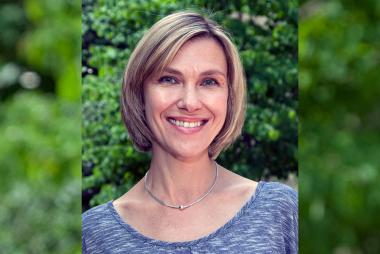
Sarah Tessendorf
Sarah has been named the new Director of the Environmental Resilience Applications Program (ERAP). This group will explore weather and climate impacts including air quality, wildfires, human health, precipitation enhancement, and renewable energy. As a Senior Scientist with RAL, her research has spanned numerous cloud microphysics research projects, including many on winter orographic cloud seeding. She has published over 60 peer-reviewed journal articles and was a Principal Investigator of the Seeded and Natural Orographic Wintertime clouds: the Idaho Experiment (aka SNOWIE) project. She previously chaired the American Meteorological Society (AMS) Committee on Planned and Inadvertent Weather Modification, and currently is a Co-Chair of the World Meteorological Organization (WMO) Expert Team on Weather Modification. She received her undergraduate degree in Meteorology from the University of Nebraska and her Ph.D. in Atmospheric Science from Colorado State University.
Scott Landolt
Scott has built a distinguished career at NCAR spanning nearly three decades, from his start as a Student Assistant in RAL. His research focuses on advancing aviation safety and winter-weather science, with an emphasis on aircraft icing, through field campaigns, sensor development, and leadership of high-profile FAA- and industry-funded projects. Since 2007, he has managed the Marshall Field Testbed, served as Principal Investigator on research grants covering both aviation and surface transportation, and is internationally recognized as a subject-matter expert on aircraft ground operations in winter weather, including serving as the sole winter-weather expert on the SAE G-12 international deicing committee. In addition to his scientific contributions, Scott has played a pivotal role in mentoring the next generation of scientists as Science Advisor for NCAR’s Advanced Study Program, supporting programs such as the Graduate Visitor Program, ASP Colloquia, and NESSI. He also leads the NSF NCAR INFORM project, which integrates field observations with research models to provide new tools for the broader academic community and improve numerical-model development. Beyond NCAR, he has contributed to higher education as Affiliate Faculty at the University of Colorado, Boulder and Metropolitan State University of Denver, where he has taught aviation weather and meteorology courses and mentored students pursuing careers in atmospheric science.
Ethan Gutmann
Ethan’s career has included building new snow-measurement systems, leading large-scale hydrology projects, creating the Intermediate Complexity Atmospheric Research model (ICAR), and co-leading snow field campaigns. More recently, he has been developing machine learning–based atmospheric models for climate projection and weather prediction. He has served as the chair of the AMS Mountain Meteorology Committee, on the AMS annual meeting planning committee, and on many other internal and external advisory committees particularly for water-resource management and climate adaptation. He has been acting as the interim leader of the Hydrometeorological Applications Program and is a Project Scientist IV in RAL.
Scott Swerdlin
Scott Swerdlin is RAL's Interim Director of the Weather Intelligence and Security Program (WISP), where he leads multidisciplinary teams advancing AI-enhanced modeling, verification, hazard prediction, and operational decision-support systems. He also leads the BEACON initiative, a benchmarking and evaluation testbed that compares physics-based and AI weather models and sets emerging standards for trustworthy environmental intelligence. Scott previously directed NSF NCAR’s National Security Applications Program (NSAP) for more than two decades, building the laboratory’s reputation across DoD, DOE, DHS, NASA, and the intelligence community. He is also the founder and president of STAR LLC, bringing decades of experience delivering advanced environmental intelligence and hybrid NWP–AI capabilities to government and industry partners. Previously, he held technical and engineering roles at Stanford Research Institute and Martin Marietta, contributing to NASA space-communications programs and classified radar and signal-processing development.