Algorithm for Predicting High ice water content Areas (ALPHA)
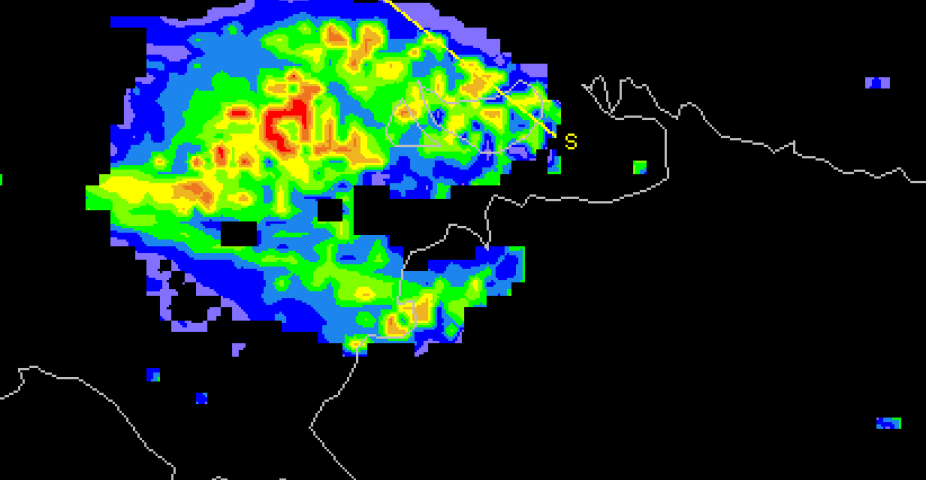
An icing hazard receiving increased attention lately is that of the ingest of large amounts of ice crystals into jet engines, causing them to fail during flight. As of this time, no accidents have resulted, but encounters with regions having high ice water content (HIWC) continue, especially in tropical areas. The HIWC team at NCAR participates in a major research program investigating not just the weather conditions contributing to HIWC conditions but the actual melting/refreezing processes within jet engines. NCAR’s role in this project is to develop warnings to keep pilots aware of and away from potentially hazardous regions. NCAR’s Algorithm to Predict HIWC Areas (ALPHA) has been deployed in multiple field campaigns, and has been trained using data from research aircraft operating in HIWC regions around Darwin, Australia, Cayenne, French Guiana, and Ft. Lauderdale, Florida.
High Ice Water Content (HIWC) Research
An aviation hazard caused by ingest of small ice crystals into jet engines was recognized in the early 1990’s. Over 150 engine roll-back and power-loss events have been attributed to ingest of high concentrations of ice particles produced in convective cloud processes. Details of the meteorological processes responsible for producing areas of high ice water content (HIWC) are still being pursued. A 2014 field campaign near Darwin, Australia provided the first research quality data set to investigate HIWC conditions. Data from this campaign are currently being analyzed to better understand the HIWC hazard to aviation and to develop warning tools that can identify regions of HIWC.
Cold, high cloud tops and heavy precipitation below flight level characterize the convective systems that are thought to produce HIWC conditions. Radar observations from pilots that have experienced engine events indicate low reflectivity at flight level, which suggests the presence of small ice crystals that are not highly reflective. Common meteorological conditions observed in documented engine icing events include:
- High altitude, cold ambient temperature
- Convective clouds or thunderstorms in the vicinity
- Ambient temperature warmer than corresponding standard atmosphere temperature
- Visible moisture (in cloud)
- Moderate to heavy rain below aircraft
- Light or no radar echoes at flight altitude on pilot’s radar
- Light to moderate turbulence
- No significant airframe icing
- No hail or lightning observations
The HIWC Product Development Team at RAL has developed the Algorithm for Prediction of HIWC Areas (HIWC). This diagnostic tool blends satellite, numerical weather prediction model, and radar data to produce a 3-dimentional estimate of the likelihood of HIWC conditions. Based on observations of meteorological conditions in previous engine icing events, ALPHA is designed to use routinely available meteorological data as input. Currently two versions of ALPHA run over the contiguous United States and Northern Australia, respectively. ALPHA can be reconfigured to operate over other geographic domains provided the appropriate input data are available. In its current state ALPHA is an experimental product undergoing verification and refinement. Potential applications for ALPHA, such as strategic flight planning or tactical cockpit avoidance, are being investigated.