Environmental Resilience Applications Program
Actionable science for human wellbeing and resilience to environmental hazards
Environmental Resilience Applications Program
Actionable science for human wellbeing and resilience to environmental hazards
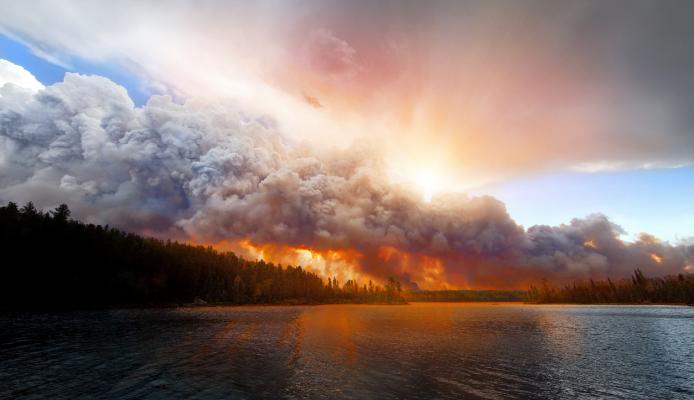
Society is facing growing threats from weather extremes. The Environmental Resilience Applications Program (ERAP) aims to mitigate threats from wildfires, poor air quality, droughts and floods, oppressive heat, energy availability, and severe storms that affect the livelihood and wellbeing of communities and many sectors of the economy. While each of these individual environmental hazards alone can be devastating, when they occur in combination, as a compound event, they can be even more catastrophic. A valuable capability of ERAP's research is our method of combining our collective expertise to address these compound hazards that are increasingly damaging our economy and wellbeing. We bring expertise that spans weather, water, and climate to statistics, Artificial Intelligence (AI) and Machine Learning (ML), and computer model development as well as Geographic Information Systems (GIS), human health, and social science.
To address these challenges, we partner with the federal, state, and local agencies and organizations in the water and energy nexus, human health and the environment, and emergency and hazard preparedness and mitigation. We combine observations and novel computer modeling capabilities, including physical models as well as AI/ML, to seek improved understanding and predictability of extreme weather and environmental hazards. Together, we develop solutions that include early-warning systems, air-quality forecast systems, and energy forecasts for utilities. We develop new tools and applications to respond to pressing questions about weather hazards, such as fire–atmosphere coupled models, high-resolution weather and climate datasets, and visualizations. Our approach is to conduct research tailored to meet specific needs of the communities we partner with.