News

NSF NCAR is continuing to improve targeted forecasts of weather impacts on roads and runways

Kim Fewless will lead a project designed to bridge communities across UCAR, NSF NCAR, UCP, and university partners as well as engage with practitioners, policy makers, the private sector, and/or nongovernmental organizations, with a focus on water systems and their predictability.

Check out the latest release of the FastEddy® 4.0, a groundbreaking, open source GPU-based model for numerical modeling of complex microscale flows.

Six researchers at the U.S. National Science Foundation National Center for Atmospheric Research (NSF NCAR) and the University Corporation for Atmospheric Research (UCAR) have been recognized with fellowships and awards from two prestigious Earth and space science organizations. 

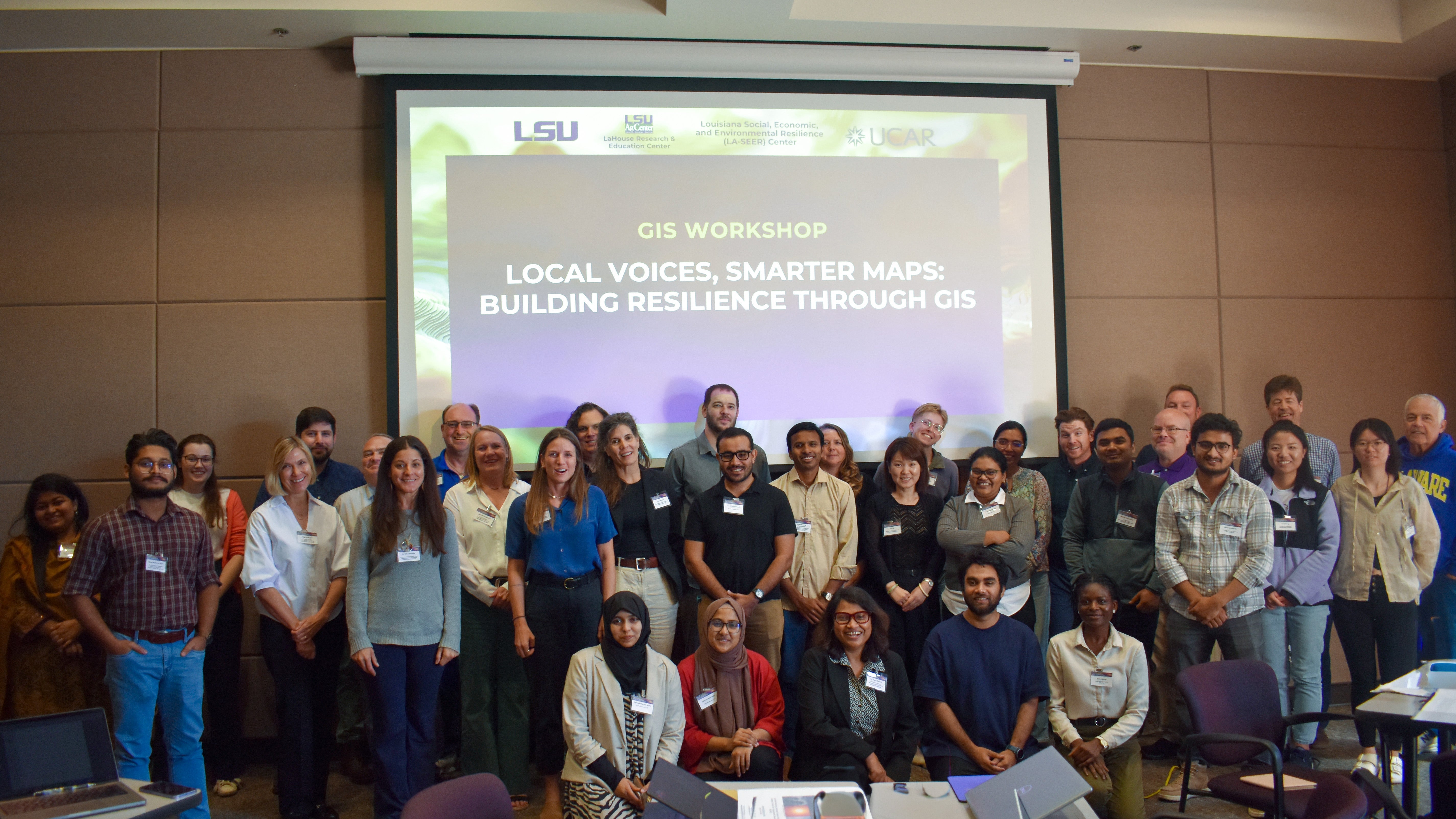
As extreme heat continues to pose a growing threat to communities across the US, the NSF NCAR GIS Program recently hosted two events aimed at deepening understanding and strengthening response strategies.

Using satellite observations to evaluate forest recovery following a wildfire could be an innovative, cost-efficient way to assess the effectiveness of land management practices, according to research published earlier this year. 

A prototype turbulence detection system is designed to guide aircraft worldwide from areas of rough air.

Researchers at the U.S. National Science Foundation National Center for Atmospheric Research (NSF NCAR) have developed an innovative tool for reliable, year-round testing to evaluate the performance of aircraft deicing fluids in snow conditions.

We are pleased to announce the release of the FastEddy® 3.0, a groundbreaking, open source GPU-based model for numerical modeling of complex microscale flows.