An interdisciplinary team of scientists has developed an innovative method to estimate the health risks of older adults who spend time in hot indoor settings.
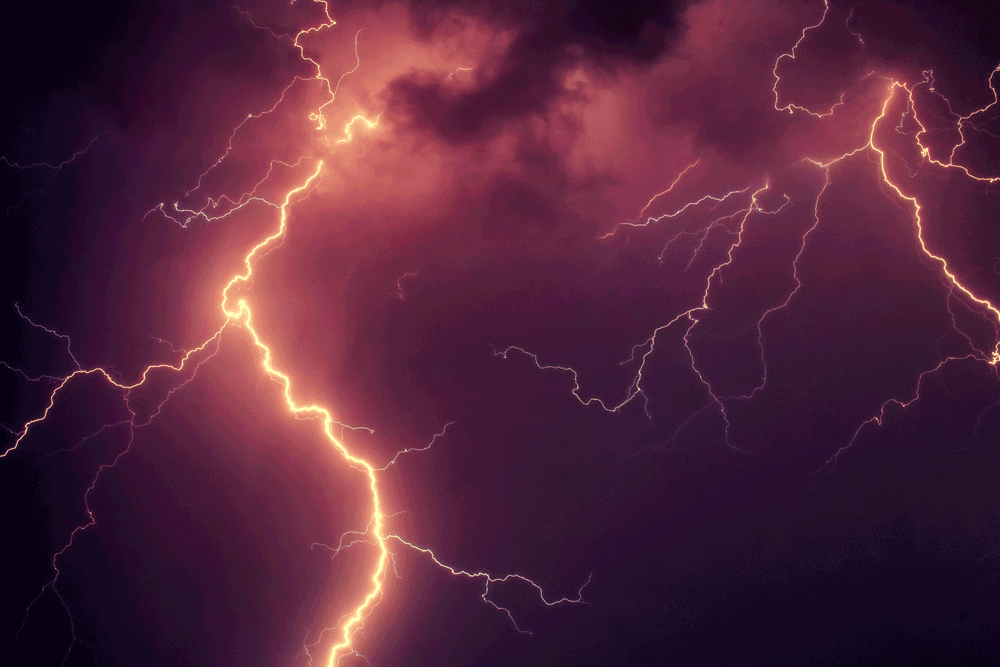
The number of thunderstorms in Alaska may triple by later this century because of climate change, increasing the risks of widespread flash flooding, landslides, and lightning-induced wildfires.
As snowpack in the Rocky Mountains declines with climate change, a new study warns that summertime rains are unlikely to significantly bolster stream levels.
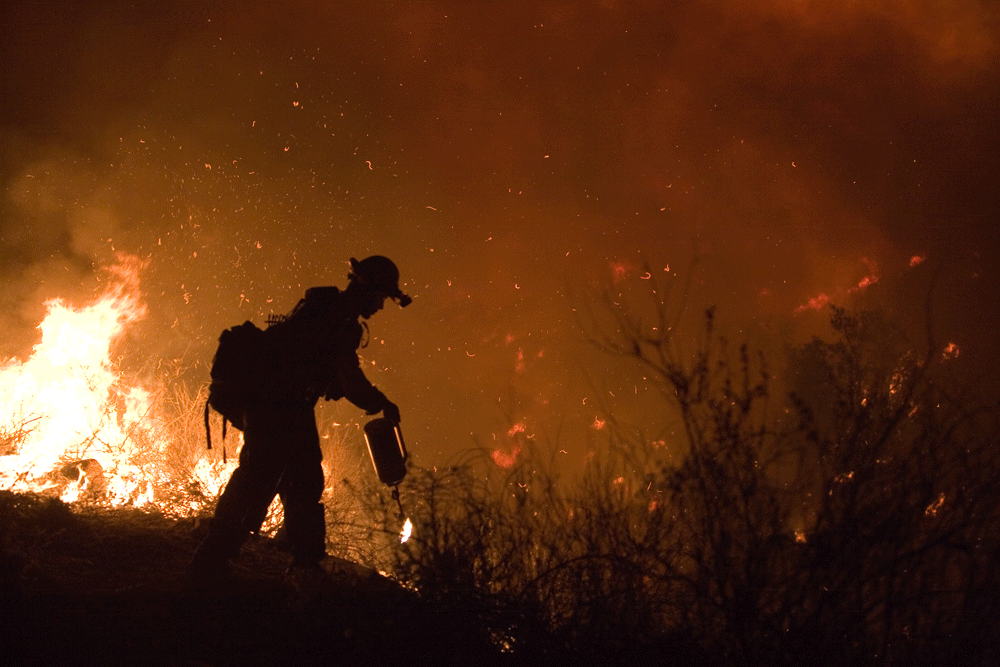
With wildfires becoming a growing threat, the National Center for Atmospheric Research (NCAR) is supporting a major, university-led initiative to better forecast the destructive events.
Three scientists at NCAR will lead research projects funded by a program of the National Oceanic and Atmospheric Administration (NOAA) that aims to improve our ability to better understand and predict climate variability in both the short and long term.
As hurricane season starts to peak, NCAR and UCAR scientists are closely watching the potential for strong winds, torrential rains, and widespread flooding.