News

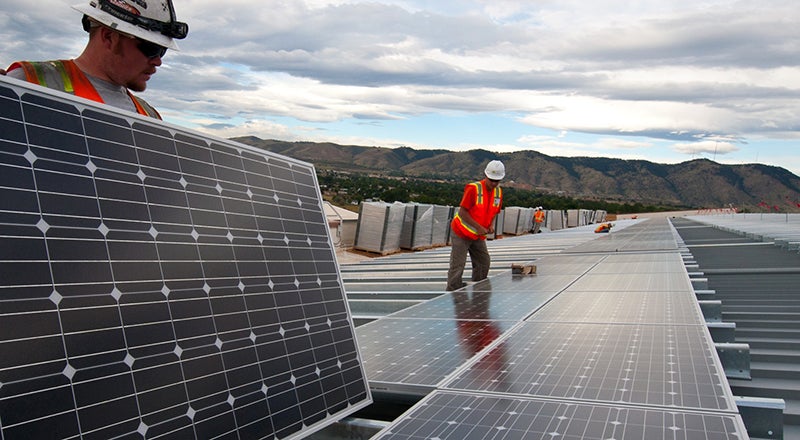
A cutting-edge wind and solar energy forecasting system that has saved electricity consumers $40 million to date has won a prestigious 2014 Colorado Governor’s Award.

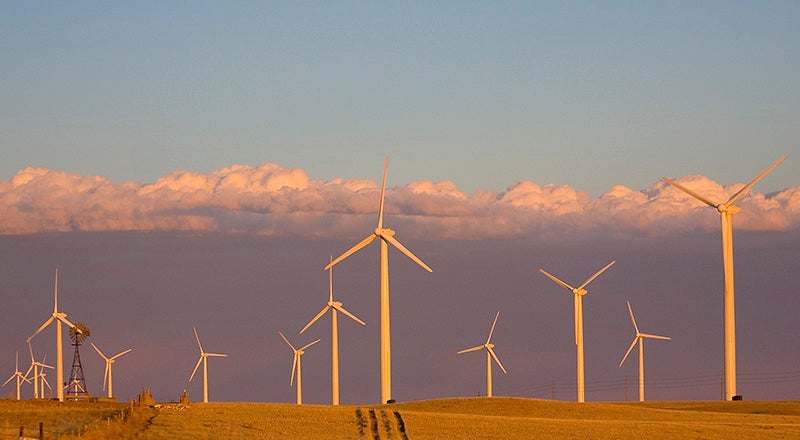
To help provide guidance to utilities, scientists at NCAR and the National Renewable Energy Laboratory have produced maps that show how U.S. wind and solar energy resources may evolve by 2060 . The maps include projections for each season and for different times of day, while taking into account natural variability.
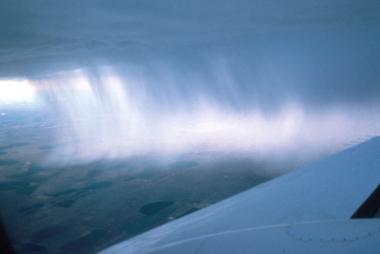
Almost a year after Colorado’s deadly and destructive floods of September 2013, a group of NCAR scientists has just completed testing an innovative new system for detecting and predicting torrential rainfall as well as the risk of local flooding.

Warmer temperatures, higher humidity, and less rain help lead to an earlier Lyme disease season, researchers have found. They have also identified several weather variables that can be used to predict the onset and peak of the next seasons.

California will likely experience more large fires in forested areas this century because of rising temperatures and changes in precipitation along with development patterns, new research finds. The blazes could increase some types of fire-generated air pollution by more than half.

The Helicopter Emergency Medical Services (HEMS) Weather Tool is a valuable weather reporting system specially designed to meet the needs of air emergency first responders. It runs as a desktop application on a computer that allows operations to overlay multiple weather conditions at low altitudes: ceiling height, visibility, winds, relative humidity, temperature, and radar images. All 3D data are provided at ground-level altitudes and can be sliced horizontally on 500 ft intervals up to 5000 ft., and can be animated in real time.

The perceived gender of a hurricane’s name is just one of many factors potentially shaping how someone reacts to a given storm, according to several scientists at NCAR who take a multifaceted approach to studying hurricane response.

What if all the energy needed by society existed just a mile or two above our heads? NCAR, the University of Delaware, and the energy firm Garrad Hassan have begun examining where the strongest winds are and how much electricity they may be able to generate.